

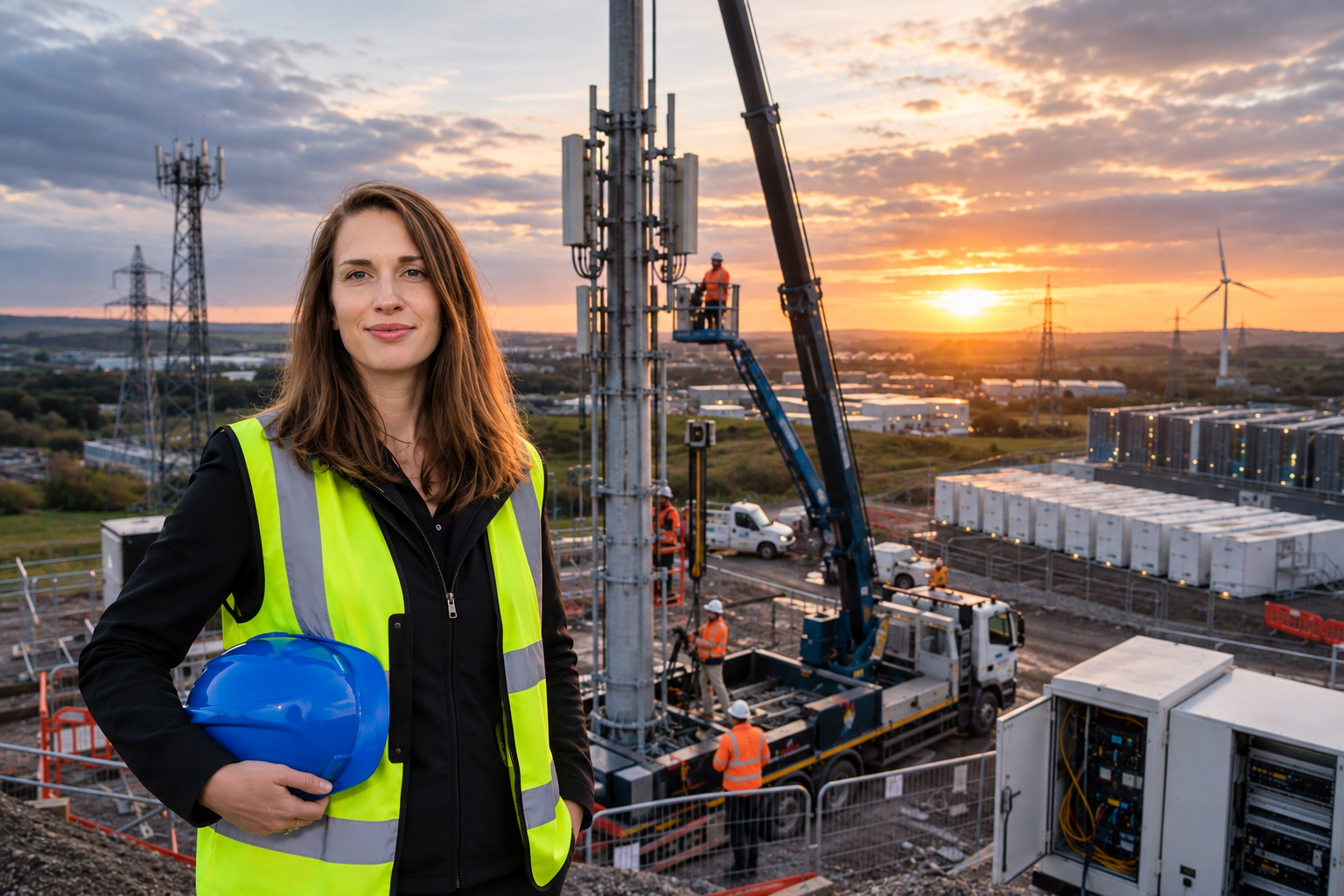
By Emily Vernon
For much of the last decade, the telecoms sector has been defined by one overriding challenge: build the network.
Coverage expansion, rollout targets and deployment speed have dominated conversations across the industry. Success was often measured in infrastructure delivered, sites completed and communities connected.
But as I listened to discussions across Connected Britain earlier this month, it struck me that we may be entering a different chapter.
Not because network build is slowing down, but because the industry itself is maturing.
The most interesting conversations were no longer about whether investment would arrive or whether programmes would move forward. There was a confidence in the room that activity will continue to build over the coming years. The focus has shifted to how the industry prepares for what comes next.
And what comes next looks very different from what came before.
From Building Networks to Maximising Networks
One of the strongest themes emerging across the sector is the shift from creating infrastructure to extracting value from infrastructure.
The UK has spent years investing heavily in connectivity. As those networks become increasingly established, attention is turning towards performance, resilience, customer experience, automation and operational efficiency.
In simple terms, the conversation is moving from quantity to quality, and that shift creates both opportunities and challenges throughout the supply chain.
Infrastructure programmes are becoming more sophisticated. Operators are seeking greater value from existing assets. Success is becoming less about delivering a single activity and more about improving outcomes across an entire programme.
As a result, organisations that can bring specialist knowledge, compliance expertise, programme management capability and operational excellence to the table will become increasingly valuable partners.
The future belongs to businesses that can solve problems, not simply supply resource.
The Next Growth Phase Is Already Taking Shape
There is often a tendency within infrastructure markets to focus on today’s workload.
What the conversations at Connected Britain reinforced for me is that we should be paying equal attention to tomorrow’s demand.
There remains a strong expectation that delivery activity will continue building through the remainder of this decade. While timelines will inevitably evolve, the direction of travel feels clear.
That creates an important challenge for suppliers and delivery partners. The organisations that perform best during periods of growth are rarely the ones that react when demand arrives. They are the ones that invest ahead of it.
Skills, capability, specialist equipment, logistics capacity and supply chain relationships all take time to develop.
Preparing for future growth requires confidence, but it also requires foresight, and those decisions are being made now.
The Line Between Telecoms and Energy Is Disappearing
Perhaps the most significant long-term trend I took away from the event is the growing convergence between telecoms, energy and wider critical infrastructure.
Whether discussions centred on AI, data centres, battery storage or power resilience, one thing became increasingly apparent, and that is that connectivity and energy can no longer be viewed in isolation.
Digital infrastructure depends on resilient power infrastructure, and as demand for data continues to rise, the sectors supporting that demand are becoming increasingly interconnected.
This is changing the shape of the market and the skills that were once considered sector-specific are becoming transferable. Operational challenges are beginning to overlap. New opportunities are emerging at the points where telecoms, energy and digital infrastructure intersect.
For businesses operating in these sectors, this convergence should not be viewed as disruption, it should be viewed as opportunity.
Looking Beyond Traditional Telecoms
The telecoms sector has always evolved alongside technology, however, the pace of that evolution feels faster and more interconnected than ever.
The industry’s priorities are broadening. The definition of infrastructure is expanding, and the relationship between connectivity, energy and critical national systems is becoming impossible to ignore.
For suppliers, operators and partners alike, the question is no longer how we build the next network, but how we support the increasingly complex ecosystem that sits behind it.
Those who recognise that shift early and adapt accordingly will be best placed to support the next generation of infrastructure delivery. And from what I heard at Connected Britain, that future may be closer than we think.


Comments are closed